
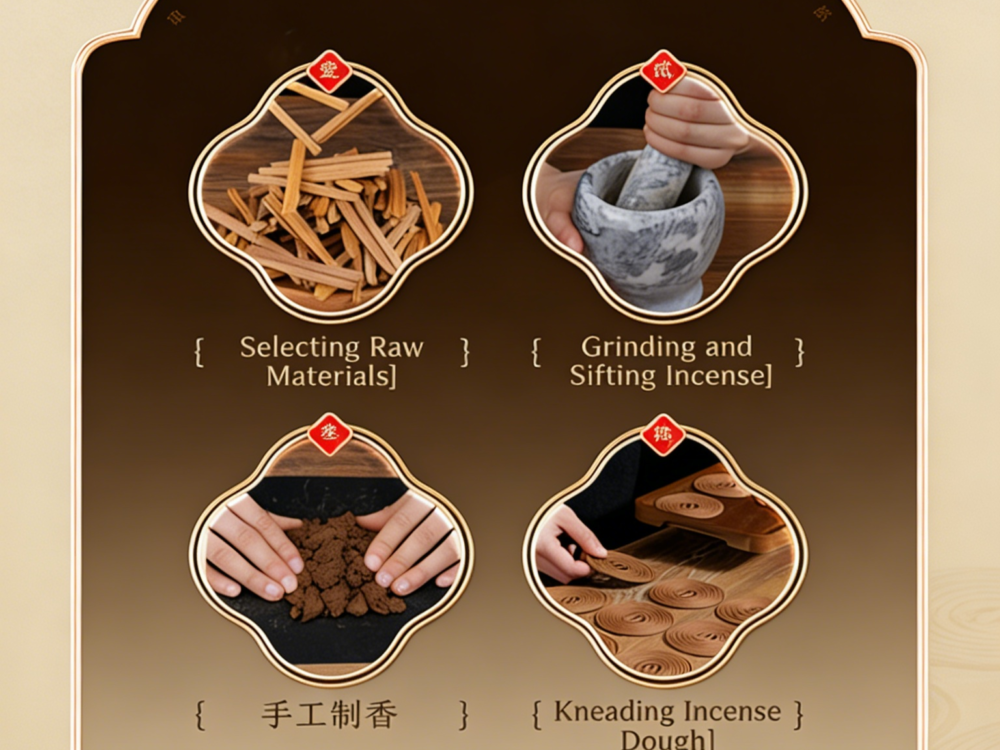
Traditional handmade incense-making in ancient China is like a gentle conversation with spices. The first step is selecting materials: you need to pick aged agarwood, mellow sandalwood, and match them with auxiliary ingredients like dried tangerine peel and agastache. Every single ingredient has to be manually sorted to remove impurities. Next comes grinding—put the spices into a blue stone mortar, grind them finely clockwise with even force until the powder is as fine as dust. Lean in, and you can smell the blended, elegant fragrance.
When making the incense paste, add natural elm bark powder as an adhesive in proportion, then slowly pour in mountain spring water, and stir constantly with a wooden spoon until it’s neither too hard nor too soft. Then take the paste, knead it into strips, insert them into bamboo incense molds, press gently, and let it sit for a while. When demolding, you have to hold your breath to avoid breaking the incense strips. Finally, arrange the shaped incense strips neatly in a cool, well-ventilated place to air-dry, turning them once a day. It takes more than ten days to finish. There’s no hurry at all in the whole process—every step requires patient polishing. That’s why the final incense sticks, when burned, emit a pure and long-lasting fragrance, carrying the warmth and craftsmanship of ancient methods.

1 Comment
This is exactly what i was looking for, thank you so much for these tutorials